Car Hire Near Airport: Operational Differences and Service Efficiency
Car Hire Near Airport: Operational Differences That Shape Efficiency

Car hire near airports operates under a distinct set of operational conditions that differ markedly from city-based rentals. Passenger flow is compressed into narrow arrival windows, vehicle turnover is accelerated, and regulatory oversight is tighter due to airport authority involvement. These factors shape how efficiently vehicles are allocated, transferred, and returned—often more than pricing alone.
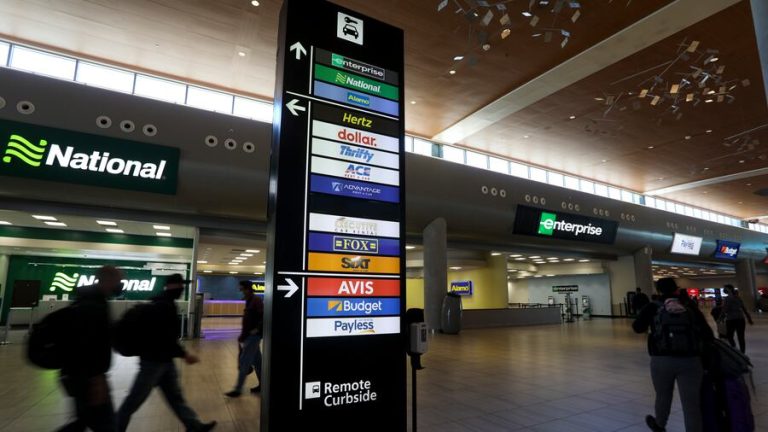
Across regions such as the United States, the United Kingdom, continental Europe, and selected Middle Eastern and Nordic markets, airport-adjacent car hire follows different operational models. Some locations concentrate services within terminals, while others rely on off-airport facilities connected by shuttle systems. These differences influence wait times, vehicle availability, and procedural complexity.
This article examines car hire near airport through an operational efficiency lens. It focuses on how structural differences affect service execution, where inefficiencies arise, and why similar rentals can feel markedly different depending on airport context—without promoting providers or guiding transactional decisions.
Concept Clarification: What “Near Airport” Actually Means
“Near airport” does not describe a single operational model. Instead, it encompasses multiple configurations shaped by airport infrastructure and local regulation.
Common models include:
-
On-terminal facilities, integrated directly into airport terminals
-
On-airport but off-terminal facilities, located within airport grounds
-
Off-airport locations, connected via dedicated shuttle systems
Each model carries distinct efficiency trade-offs. Proximity alone does not guarantee speed; workflow design, vehicle staging, and coordination with flight schedules often matter more.
Understanding these distinctions clarifies why airport car hire experiences vary even within the same city.
Decision Factors Influencing Operational Efficiency
Infrastructure and Access Design
Airport infrastructure strongly influences efficiency. Dedicated rental centers streamline vehicle handover but may concentrate demand into peak periods. Shuttle-based systems distribute demand but introduce transfer steps that add time and coordination complexity.
Efficiency depends on how well infrastructure aligns with passenger arrival patterns rather than on physical distance alone. A structural overview of how transportation infrastructure affects mobility services is outlined in [car rental & transportation guide].
Fleet Turnover and Demand Synchronization
Airport rentals experience rapid fleet turnover driven by flight schedules. Delays, cancellations, or early arrivals can disrupt allocation plans, creating bottlenecks even when vehicle supply is sufficient.
Operationally efficient systems synchronize fleet movement with real-time flight data. When synchronization is weak, delays manifest as queues, vehicle substitutions, or extended processing times.
An analytical discussion of how demand synchronization affects mobility efficiency is explored in [car hire insurance explained].
Regulatory and Security Constraints
Airports impose additional regulatory layers, including security protocols, concession agreements, and local authority oversight. These constraints shape staffing levels, operating hours, and permissible workflows.
While regulation enhances safety and standardization, it can limit flexibility during irregular operations. Efficiency outcomes depend on how well service processes are designed within these constraints.
Scenario-Based Operational Profiles
Peak Arrival Windows
During peak arrival periods, efficiency is tested by volume rather than complexity. High passenger throughput compresses processing time, magnifying the impact of minor delays.
Operational differences—such as centralized desks versus distributed kiosks—become especially visible under these conditions.
Disruption-Driven Surges
Flight disruptions create sudden surges in demand as travelers seek ground transportation alternatives. Airport car hire operations must absorb these spikes while maintaining compliance and documentation standards.
In such scenarios, efficiency is measured by adaptability rather than speed alone. For broader context on how transportation systems respond to disruption, see [Internal link to buffer article].
Return and Vehicle Reallocation
Returns often receive less attention than pickups, yet they influence downstream availability. Efficient return workflows ensure rapid inspection and redeployment, minimizing idle time.
Inefficient returns can cascade into pickup delays later in the day, illustrating how airport operations function as interconnected systems.
Practical Insights for Interpreting Airport Car Hire Efficiency
Proximity Versus Process
Closer does not always mean faster. Operational design—queue management, staffing allocation, and vehicle staging—often outweighs physical distance in determining efficiency.
Predictability as an Efficiency Metric
Operational efficiency is reflected in predictability. Consistent processing times and clear workflows reduce uncertainty even when absolute speed varies.
Transparency and Expectation Management
Clear communication about process steps and timing supports perceived efficiency. When travelers understand why delays occur, operational friction feels more manageable, reinforcing trust in the system.
Neutral Summary Closing
Car hire near airports illustrates how operational efficiency is shaped by structural design rather than by proximity alone. Infrastructure configuration, demand synchronization, and regulatory constraints combine to produce varied outcomes across regions and facilities.
Viewed through an operational efficiency lens, airport car hire functions as a complex mobility subsystem. Understanding its structural differences helps explain why experiences diverge—and why efficiency depends less on headline convenience and more on how well processes align with the realities of airport operations.