Business Travel Management Solutions: Cost Control and Operational Risk
Business Travel Management Solutions: Managing Cost Exposure and Operational Risk

Business travel concentrates cost and risk into compressed timeframes. A single itinerary can trigger cascading expenses—changes, delays, compliance reviews, duty-of-care actions—while decisions are made under pressure. As travel volumes scale across regions, these pressures expose weaknesses in fragmented processes and manual oversight. In response, organizations increasingly frame business travel management solutions as mechanisms for controlling operational risk rather than as tools for convenience.
This cost-risk framing is especially pronounced in multinational contexts spanning North America, Europe, and selected Middle Eastern and Nordic markets. Different regulatory environments, tax rules, and traveler protection regimes raise the stakes of inconsistency. The objective shifts from optimizing individual trips to stabilizing the system that governs them.
This article evaluates business travel management solutions through an operational efficiency lens. It examines how solutions are structured, what trade-offs they introduce, and where constraints shape outcomes—without promoting providers or prescribing purchasing actions.
Concept Clarification: What “Solutions” Mean in Business Travel Management
In corporate contexts, “solutions” refers to integrated capabilities that coordinate policy enforcement, booking execution, expense reconciliation, and risk oversight across the travel lifecycle. These capabilities may be delivered through platforms, workflows, or managed processes, but their defining feature is systemic alignment.
Operational efficiency depends on how well solutions address four functions simultaneously:
-
Policy translation, converting governance into executable rules
-
Process orchestration, ensuring bookings, changes, and disruptions follow defined paths
-
Financial visibility, consolidating costs for timely reconciliation and reporting
-
Risk awareness, enabling organizations to locate travelers and assess exposure
A solution that strengthens one function while weakening another can increase overall risk. For example, tighter booking controls without integrated expense data may slow approvals yet fail to improve cost outcomes. Effective solutions reduce variance across the system rather than optimizing isolated steps.
Decision Factors Shaping Operational Efficiency
Cost Visibility Versus Control Granularity
Organizations face a trade-off between granular control and system agility. Highly granular controls—multiple approval layers, narrow policy bands—can reduce out-of-policy spend but often increase cycle time and administrative burden. Broader controls improve speed yet risk leakage if monitoring is weak.
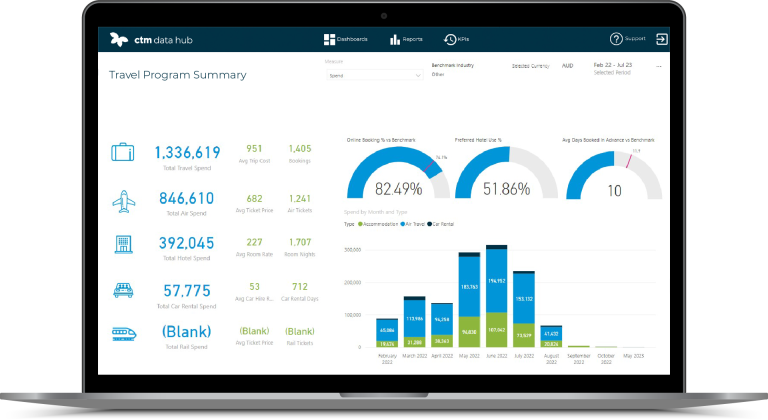
Operational efficiency emerges when solutions provide real-time visibility that allows lighter controls without sacrificing accountability. When finance and operations can see spend patterns as they develop, corrective action replaces blanket restriction.
A structural perspective on aligning governance with execution is outlined in [corporate travel management].
Integration With Finance, HR, and Risk Functions
Efficiency gains compound when travel management integrates with adjacent systems. Expense platforms, payroll, tax, and risk monitoring each hold partial views of travel activity. Without integration, organizations reconcile after the fact, absorbing cost overruns and compliance gaps.
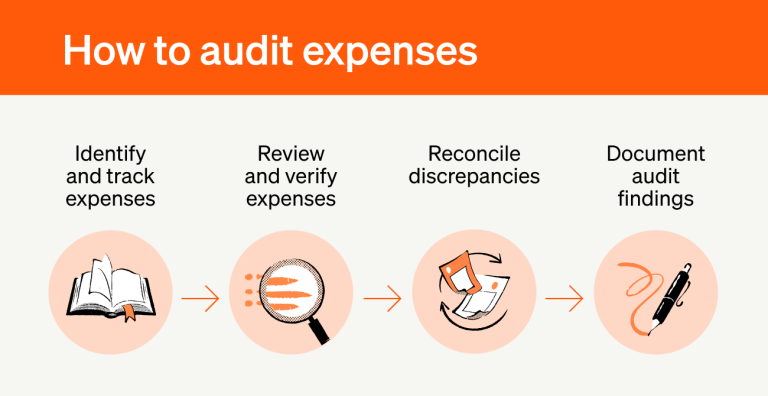
Integrated solutions shorten feedback loops. They enable pre-trip validation, in-trip awareness, and post-trip reconciliation within a single operational view. The constraint is complexity: deeper integration increases implementation effort and demands consistent data standards.
An analytical discussion of these integration trade-offs appears in [travel expense management for companies].
Standardization Across Regions
Regional diversity challenges efficiency. Different currencies, regulatory requirements, and traveler protection rules complicate standard workflows. Over-standardization can ignore local constraints; under-standardization fragments reporting and response.
Operationally efficient solutions embed regional rules into common workflows, allowing local compliance within global oversight. This approach reduces exception handling while preserving jurisdictional accuracy.
Scenario-Based Use Cases
High-Volume Routine Travel
For organizations with frequent short-haul or recurring routes, inefficiency accumulates quietly. Small delays in approvals or inconsistent booking behavior scale into measurable cost drift. Solutions that standardize routine travel free operational capacity to address exceptions.
In these scenarios, efficiency is measured by variance reduction rather than headline savings.
Disruption and Irregular Operations
When widespread disruption occurs, cost exposure escalates rapidly. Changes, accommodation, and re-routing decisions must be coordinated while maintaining duty-of-care obligations. Solutions that centralize traveler visibility and decision authority reduce duplication and delay.
For broader context on how disruption information is managed across travel systems, see [corporate travel risk management].
Cross-Border Compliance Pressure
International itineraries introduce compliance risk—immigration rules, tax exposure, and data protection obligations. Solutions that surface compliance signals before travel begins reduce reactive intervention and associated cost.
Here, operational efficiency aligns closely with risk prevention rather than remediation.
Practical Insights and Best-Practice Considerations
Designing for Exceptions, Not the Average
Most operational cost arises from exceptions. Effective solutions are designed around disruption handling, approvals under time pressure, and rapid communication. Systems optimized only for routine bookings often underperform when stress-tested.
Data Consistency as an Efficiency Multiplier
Inconsistent data definitions undermine efficiency. When booking data, expense categories, and traveler profiles diverge, reconciliation becomes manual. Solutions that enforce consistent data structures across functions reduce downstream labor and error.
Transparency Over Tight Control
Visibility enables trust. When stakeholders can see spend, compliance status, and traveler exposure in near real time, organizations can relax rigid controls without increasing risk. Transparency replaces micromanagement with informed oversight.
Neutral Summary Closing
Business travel management solutions function as risk-containment systems within complex organizational environments. By aligning policy, process, finance, and risk oversight, they convert fragmented travel activity into an operationally governed flow.
Viewed through an operational efficiency lens, these solutions are defined less by features than by outcomes: reduced variance, faster response, and clearer accountability. In multinational settings where cost and risk intersect, their value lies in stabilizing the travel system—absorbing disruption without amplifying exposure—while maintaining consistent control across diverse regions.